
Enhancing Sustainability and Resilience in Food Supply Chains at POMS-HK 2026

At the POMS-HK International Conference 2026, held from 2–4 January 2026, the collaborative research team from IPB University and NUS organised two invited sessions:
1) Sustainable Supply Chain Practices chaired by Anton Reiling and Mabel Chou
2) Enhancing Sustainability and Resilience in Food Supply Chains chaired by Dikky Indrawan
There are 10 papers presented in the two sessions, which showcase the research achievements on improving sustainability and resilience in food supply chains through the collaboration.
Key research themes included support for Indonesia’s national Free Meal Program through modelling approaches that link nutrition goals with local sourcing from SMEs and farmers, aiming to enhance resilience to price volatility and supply disruptions. Technological solutions were also prominent, with studies proposing smart network design to reduce food loss via digital traceability and optimized logistics, as well as the use of artificial intelligence and synthetic imagery to improve banana quality assessment and shelf-life prediction in data-scarce environments. Social and environmental dimensions were addressed through analyses of smallholder inclusiveness and green supply chain management. Comparative value chain studies revealed institutional barriers limiting farmer participation, while research on food MSMEs showed growing environmental awareness, with government regulation remaining a key driver of adoption.
Session 1

1. Critical Import Items Dashboard and Trade Flow Predictive Modelling under Global Trade Network Disruptions
Abstract
We develop a dashboard tool for visualizing, calibrating, and predicting global trade networks. The tool is grounded in a price competition framework, where importer demand is modelled using discrete choice models (e.g., the multinomial logit, MNL) to capture the market dynamics of international trade. Leveraging real trade data on prices and flows, we develop data-driven techniques to calibrate the key parameters of the underlying game-theoretic model. The calibrated model can then be employed to predict market equilibria under various disruption scenarios—ranging from supplier interruptions to tariff wars—thereby offering valuable insights for both practitioners and policymakers. We evaluate the model using the 2018 U.S.–China tariff episode for semiconductor components (HS 8473.30). The model accurately predicts post-tariff changes in market prices and trade flows following the U.S. 25% duty on Chinese imports. Counterfactual analyses indicate that U.S. tariff revenue peaks at roughly a 25% rate, consistent with incentives to set tariffs near this level.
2. Joint Assortment and Inventory Optimization for The Front-End Warehouse
Abstract
This study examines assortment and inventory optimization in a two-warehouse e-commerce system that aims to balance delivery speed and cost efficiency. The system consists of a front-end warehouse, strategically located near customers to support rapid order fulfilment but constrained in inventory capacity, and a back-end warehouse, which holds a larger inventory but incurs higher fulfilment costs and longer shipping times. We model this setting as a joint assortment and inventory optimization problem, where initial assortment and inventory decisions are made for the front-end warehouse before demand is realized. Once orders are placed, the e-commerce firm determines the quantity of each order type to fulfill from the front-end warehouse. The marginal distributions of each order type are known, while the correlation structure of the joint distribution is unknown. We formulate the problem using the Marginal Distribution Model (MDM). As MDM is not directly tractable, we propose an approximation that relies solely on marginal distributions and provides valid lower and upper bounds for the original problem. We further investigate conditions under which these bounds are tight. Additionally, we show that the joint assortment and inventory optimization problem is NP-hard, even under simplified settings with deterministic demand and single-item order types. To address this computational complexity, we develop a heuristic algorithm to facilitate efficient assortment decisions. Numerical experiments based on simulated data demonstrate that our proposed policies achieve a favourable balance between optimality and computational efficiency.
3. Optimizing Supply Chain Finance for Equitable Growth: A Game-Theoretic Analysis Of Innovative Financing Models in the Indonesian Banana Supply Chain
Abstract
Supply Chain Finance (SCF) solutions hold promise for alleviating the working capital constraints of smallholder farmers, yet their design often perpetuates power asymmetries, leading to inequitable outcomes. This study proposes and evaluates a novel, equitable SCF framework for the banana supply chain of Tanggamus, Indonesia. We develop a multi-period Stackelberg game model to analyze the interplay between capital-constrained farmers, local collectors, a farmer cooperative, and a dominant agribusiness firm that acts as a finance provider. The model explicitly incorporates the unique production cycle of the ‘Pisang Mas’ banana and evaluates innovative SCF instruments, such as pre-harvest input financing coupled with post-harvest repayment and dynamic pricing contracts linked to final product sales. Our analysis quantifies how conventional SCF models, where the dominant firm extends credit to secure supply, can maximize its own profitability at the expense of farmer welfare and long-term chain resilience. In contrast, we demonstrate that SCF structures designed with fairness as a core principle can create a win-win scenario. These equitable models significantly enhance farmer profitability and bargaining power by providing critical upfront capital while ensuring a fair share of the final revenue. Crucially, this approach also boosts the stability and total value generated by the supply chain by reducing default risk, ensuring consistent quality and supply, and fostering cooperative relationships. This research provides a actionable, game-theory informed framework for financial institutions, agribusinesses, and policymakers to design SCF solutions that are not only financially viable but also drive sustainable and inclusive development.
4. Fighting Deforestation Through Mechanism Design: A Dynamic Hierarchical Principal-Agent Approach
Abstract
Designing contracts that ensure compliance when information is non-verifiable remains a central challenge for policymakers and firms. Motivated by the persistent issue of illegal land clearing in the palm oil industry, this study examines how to robustly deter deforestation within a dynamic hierarchical Principal–Agent framework. We contribute to the literature by explicitly characterizing moral hazard arising from spillover effects and side contracts, and by applying mechanism design to a pressing sustainability problem. Our findings show that in the absence of exogenous spillovers, collusion can be fully eliminated through sufficiently strong incentive schemes – even under the risk of endogenous spillover. These results offer new insights into how policymakers can design contracts to curb deforestation and reduce carbon emissions, and they help explain why current practices often fail. Preliminary findings on the robustness of the model under exogenous spillover risk suggest that while deforestation cannot be fully eliminated, high levels of compliance among farmers can be achieved through sufficiently large incentives.
5. Perishable Inventory System: The Value of Perishability Information
Abstract
We study a periodic-review perishable inventory system that incorporates advanced perishability information (API). Unlike traditional models in the perishable inventory literature, we assume that product lifetimes are stochastic and can be revealed through a spectroscopy-based scanner. In each period, the firm makes replenishment decisions based on both the available inventory and revealed perishability information, with the objective of minimizing the total expected cost, which includes linear ordering costs, holding costs, backlogging or lost-sales penalties, and disposal costs. We develop a general model and derive the structural properties and optimal policies for two specific scenarios: the Baseline Model, where the retailer has only distributional information, and the API Model, where the retailer has perfect perishability information. Our numerical results demonstrate the substantial value of incorporating perishability information, showing significant cost reductions and improved decision-making under the API Model.
Session 2
1. A Study On Green Supply Chain Management to Support the Sustainability of Food MSMEs In Bogor City, West Java Province
Abstract
The Indonesian food industry is facing enormous pressure due to climate change, declining agricultural productivity, and increasing food waste. Food MSMEs, including those in Bogor City, which has a large number of businesses, are still not ready to implement sustainable practices because of limited knowledge, technology, and resources. Rapid growth of the food and beverage sector has also increased the volume of waste, and suboptimal waste management has led to pollution and emissions. Green Supply Chain Management (GSCM) offers environmentally friendly solutions, but its implementation remains low due to a lack of understanding, the complexity of the supply chain, and a lack of regulations and technical support. This study aimed to identify the application of GSCM in food MSMEs in Bogor City and analyze the influence of its forming variables on business performance and sustainability performance. The study was conducted from February to November 2025 using purposive and stratified sampling methods with 254 food MSMEs. Data were collected through literature review, surveys, and interviews, and then analyzed using descriptive analysis and SEM-PLS. The results showed that the implementation of GSCM in Bogor MSMEs is quite good, although it is still dominated by micro-businesses. Business actors have begun to increase the use of environmentally friendly raw materials, reduce single-use plastics, and efficiently manage waste. Local government policies have reinforced these green practices. Environmental Knowledge, Strategic Orientation, Government Regulation, and Green Awareness were found to have a significant positive effect on GSCM. GSCM also has a positive impact on business and sustainability performance. In addition, GSCM acts as an important mediator that connects internal and external factors in improving the performance and sustainability of food MSMEs in Bogor. Keywords: Food industry, green supply chain, MSME, sustainability
2. Assessing The Inclusiveness of Smallholders in the Banana Value Chains In The Eastern And Western Regions Of Java Island, Indonesia
Abstract
Bananas are a strategic horticultural commodity in Indonesia, with a production of 9.33 million tons in 2023. The urgency of this research is to strengthen the position of smallholder farmers by developing an efficient, resilient, and inclusive supply chain. Java island is the largest banana producer in Indonesia. The study is focused on Lumajang (East Java) and Cianjur (West Java) with the commodities Cavendish and Mas Kirana. This study assesses the degree of inclusiveness among smallholder farmers within banana value chains in both the eastern and western regions of Java Island, Indonesia. This study utilizes mixed methods, combining quantitative surveys and qualitative interviews, to analyze the opportunities and barriers smallholders face in market participation, resource access, and value creation at various nodes of the value chain. A comparison of the two regions reveals differences in institutional support, infrastructure, and farmer organization, which significantly affect the extent of inclusivity and economic benefits for smallholders. The findings highlight key challenges, such as limited bargaining power, access to finance and information, and integration with agro-industries. Recommendations include policy interventions to improve banana supply chain governance, enhance smallholder collaboration, and facilitate equitable access to value-added processes, thereby contributing to the more inclusive and sustainable development of the banana sector across Java.
3. Building Resilient Local Supply Chains: An Agent-Based Analysis of SMEs And Farmers In West Java's Free Meal Program With A Banana Case Study
Abstract
The success of Indonesia’s ambitious free meal program (Program Makanan Gratis) is critically dependent on a resilient and efficient supply chain capable of sourcing from local small and medium enterprises (SMEs) and smallholder farmers. Focusing on the banana supply chain—a key commodity for nutrition and a primary crop for many smallholders in West Java—this study examines the pronounced barriers these actors face. These include high transaction costs due to perishability, fragmented cold chains, price volatility, and the challenge of meeting consistent quality and volume demands for the public program. This research develops an advanced economic modelling framework to analyze and enhance the resilience of this localized ecosystem. By integrating Transaction Cost Economics (TCE) to quantify the operational and contractual hurdles with Agent-Based Modelling (ABM) to simulate the interactions between farmers, SME aggregators, and government purchasers, the study captures the system’s complex dynamics. The model will be calibrated with empirical data from West Java’s banana sector and simulate disruption scenarios such as harvest failure, logistical delays, and price shocks. The findings aim to provide a validated roadmap for policymakers to design targeted interventions—such as decentralized ripening centers, contract farming structures, and dynamic pricing mechanisms—that secure the banana supply for the free meal program while strengthening the economic viability of the local SMEs and farmers at its core.
4. Intelligent Supply Network Design For Reducing Food Loss In Indonesia’s Banana Value Chain: Insights from Multi-Node Flow Mapping And Operations Optimization
Abstract
Indonesia is the world’s third-largest banana producer, yet its banana supply network experiences substantial food loss across upstream, midstream, and downstream nodes due to fragmented logistics, heterogeneous smallholder practices, limited cold-chain access, and inefficiencies in ripening, aggregation, and inter-island distribution. This study develops a forward-looking, theoretical integrated supply-chain operations framework for the Indonesian banana industry using a multi-node systems map covering village centres, intermediate transport (first-mile and mid-mile), aggregation hubs, ripening facilities, domestic wholesale channels, and export pathways. Drawing on literature review, empirical field observations, stakeholder interviews, and system-level modelling, we identify critical loss points, particularly pre-cooling gaps, inconsistent packaging standards, temperature abuse during inter-island transport, and mismatches between farmer harvesting cycles and buyer specifications. Building on these insights, the study proposes an intelligent operations strategy that integrates optimization, digital traceability, and socio-technical interventions to reduce losses while strengthening farmer participation. We evaluate potential improvements such as coordinated collection from decentralized smallholders, temperature-controlled mid-mile transport, ripening-room scheduling algorithms, and differentiated market pathways for various banana cultivars. The findings demonstrate that targeted operational redesign can significantly reduce food loss across the network while improving income stability for smallholders. This work contributes to the literature on perishable supply-chain management by offering a scalable framework for designing human-centred and data-driven operations that enhance efficiency, equity, and sustainability in tropical fruit supply networks. Keywords: Food loss and waste (FLW), Perishable supply chain, Digital traceability, Socio-technical systems.
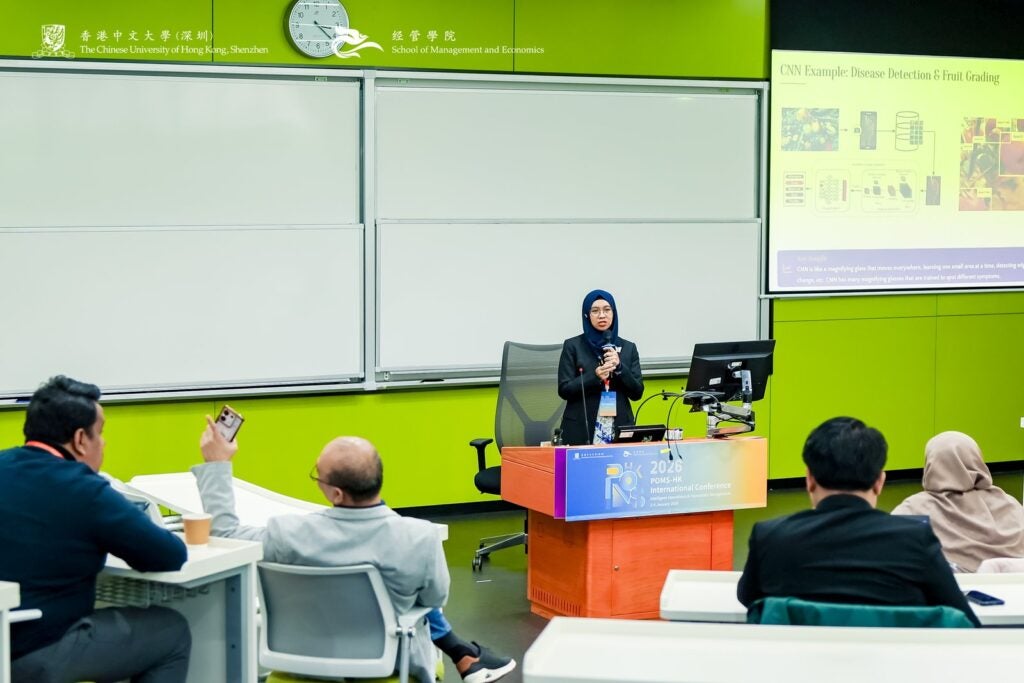
5. Addressing Data Scarcity In Banana Shelf-Life and Quality Assessment Through GAN-Based Synthetic Image Augmentation
Abstract
The performance of deep learning models in fruit quality grading and disease detection is often constrained by data scarcity and class imbalance, arising from the high cost and variability of fruit image acquisition. This review explores the role of Generative Adversarial Networks (GANs) as a data-centric solution for generating synthetic, class-balanced fruit images to enhance model training under limited data conditions. Recent studies demonstrate that GAN variants, such as Deep Convolutional GAN (DCGAN), Conditional GAN (CGAN), CycleGAN, and StyleGAN, produce realistic synthetic imagery capable of enriching datasets for fruits like apples, citrus, dates, and lychees. For instance, StyleGAN-based augmentation in date fruit classification improved ripeness recognition accuracy, while CycleGAN-driven spectral image synthesis enhanced apple decay prediction. Similarly, GAN-augmented CNN models have improved detection of banana and guava fruit diseases, addressing underrepresented symptom classes. However, a significant research gap remains in applying GANs for banana shelf-life prediction, where time-dependent quality degradation remains underexplored. The synthesis of current evidence suggests that GAN-augmented datasets consistently yield higher recall, precision, and F1-scores, outperforming traditional augmentation techniques. Overall, GAN-based synthetic data generation presents a transformative approach to mitigating data scarcity in fruit phenotyping, enabling more reliable and inclusive AI systems for postharvest monitoring, ripeness estimation, and disease classification.
Overall, these two sessions reflected a deepening partnership between IPB University and NUS, characterized by interdisciplinary collaboration, strong policy relevance, and a holistic supply chain perspective, laying the groundwork for future studies and field-based pilot implementations.
Stay tuned for more updates!
QUICK RECAP:
